
Previous Residents at a Longmont Address
A house history begins with the source that covers the period you care about. Weld’s recorded-document index reaches back to 1865. Boulder’s online start is not stated, so older books and office routes matter. Longmont’s directory runs are uneven, the Longmont-Boulder criss-cross window is later, and permit reports have no complete published first year. The table keeps those limits visible while showing what each source can contribute.
| Source | Years or cutoff | Where held | What it shows |
|---|---|---|---|
| Weld recorded documents | 1865-present | EagleWeb and Clerk and Recorder | Grantor, grantee, instrument, date, legal trail |
| Boulder recorded documents | Online current; exact start not stated | Public index and office books | Deeds, liens, plats, covenants, transfers |
| Longmont city directories | 1910, 1912-13, selected 1921-1959, Polk 1966-1997 | Library, DPL, FamilySearch, Ancestry | Householder, address, occupation, family clues |
| Longmont-Boulder criss-cross | 1991-1996 | Library of Congress guide and collection | Reverse address-to-occupant clues |
| Sanborn maps | 1890, 1895, 1900, 1906, 1911, 1918 | Library of Congress | Building footprint, use, lot, street context |
| Voter and Ledger indexes | 1898-1919 voter; 1879-1935 Ledger | LGS, Library, Museum, newspapers | Historical address, ward, age, occupation, event lead |
| Permits and Archives | Monthly current reports; collection-specific historical dates | Longmont city, Museum, Archives | Building chronology, photos, clippings, people and place leads |
Start with the parcel for title history, then use the directory or census for household history. A record that names a former owner may not name the person who lived there, and a directory entry may be a subscriber or business listing rather than a titleholder.
The Weld EagleWeb recording route is the source screen for the deed-index example.
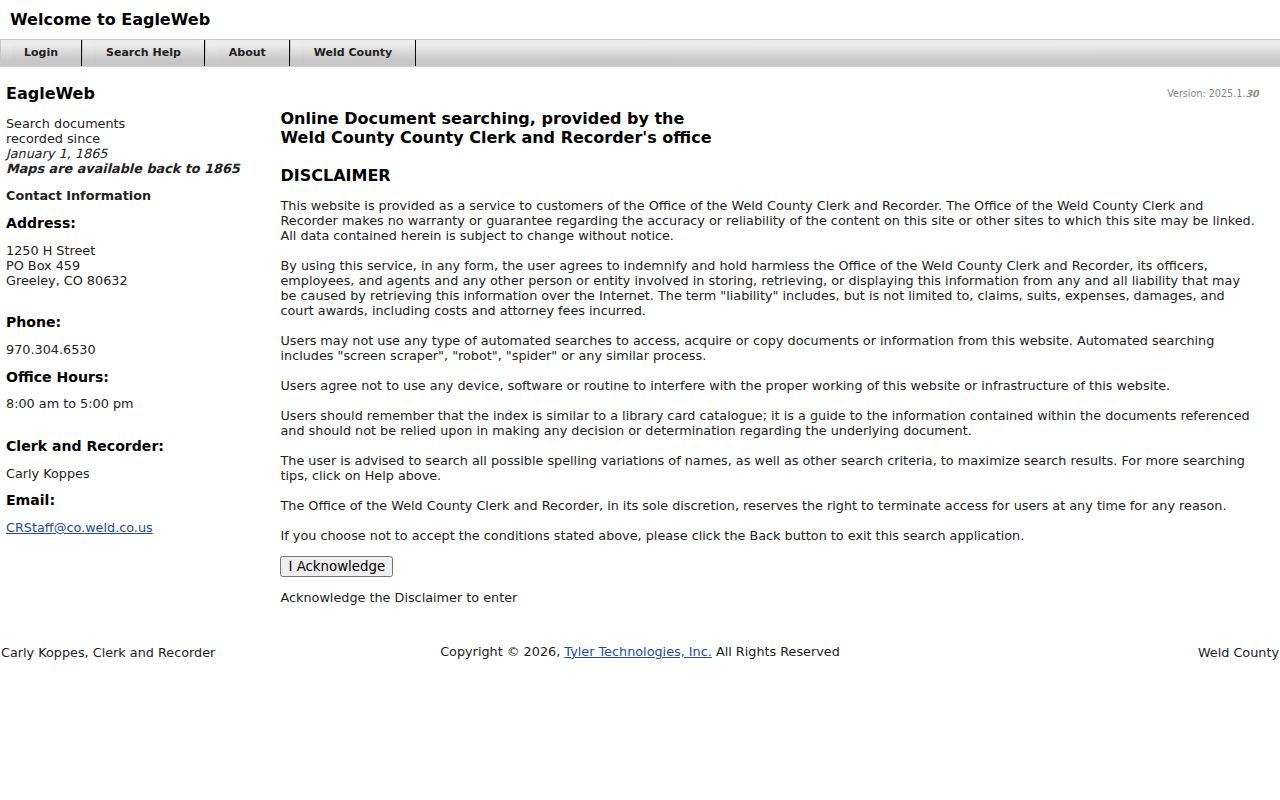
The Weld EagleWeb recording route shows the catalogue warning that an index is not the underlying instrument. Preserve the document number and request the instrument when the chain matters.
Freeze a Longmont Resident Address
Save the current owner, mailing address, situs, account, parcel number, subdivision, lot or block, legal description, sales-history lines, tax year, and a map reference. Test the address in both Boulder and Weld if the county is not already known. A Longmont mailing city is not enough. The parcel’s legal description and map geometry are the durable keys when a street number, addition, annexation, or postal label changed.
Boulder Property Search can start with address, owner, street, subdivision, account, parcel, or S-T-R. Weld can start with account, owner, address portion, subdivision and block or lot, parcel, S-T-R, or API. Use the returned parcel to open GIS, permits, tax clues, and recorded documents. Do not use a present mailing address as proof that a present owner lives at the property.
Record a retrieval date. Boulder reported public-record platform and file-management modernization in 2024-2026, and Longmont’s portal carries a document-remediation notice. A missing image or changed search label may reflect the platform, not the loss of the original record.
Walk a Longmont Resident Deed Chain
The chain of title is the sequence of recorded transfers for one legal parcel. Begin with the current owner shown by the assessor. Find that person as grantee in the county recorder index, open the acquisition deed, and read the grantor. Search the grantor as an earlier grantee. Repeat while checking that the legal description still describes the same land.
- Pull the current parcel account, owner, legal description, subdivision, lot or block, and sales-history clue.
- Search the Boulder or Weld recorder by current grantee, legal description, date, document type, or document number.
- Save the reception or document number, recording date, grantor, grantee, and image or copy status.
- Search the prior grantor as grantee in an earlier date range, repeating for each conveyance.
- Branch for trusts, estates, companies, multiple owners, quitclaims, beneficiary deeds, releases, liens, plats, and probate transfers.
- Move to office books, mail, phone, email, drop box, or in-person research when an online cutoff blocks the earlier deed.
- Grantor
- The party transferring an interest in the instrument.
- Grantee
- The party receiving the interest named in the instrument.
- Chain of title
- The linked conveyance history for one parcel or legal description.
- Legal description
- The formal land description, often more stable than a street address.
A deed of trust, lien, or assignment can explain a name in the index without showing an ownership transfer. A reception date is not necessarily a signing date. Read the instrument before assigning a role.
Longmont Resident Records Differ by County
Weld’s EagleWeb states that real-estate records and maps are searchable from January 1, 1865. Its warning compares the index to a library card catalogue. The office at 1250 H Street in Greeley handles records and copies, and the recording department publishes phone and email contact. Boulder’s recorded-document index offers Quick Search and Advanced Search, a date range, index-only or index-plus-OCR modes, grantor and grantee terms, document type, subdivision, and legal-description searches. Its exact online start year is not stated in the research.
Boulder’s recording office also supports mail, drop box, in-person, phone, and email routes. The current flat recording fee is $43 per document effective July 1, 2025, while copies and certification use separate charges. Watermarked online copies are free in the noted workflow; clean copies cost a fee. Do not copy a current fee into a historical deed calculation without checking the live page.
The Boulder recording guidance is useful for the grantor-grantee search. If the parcel is on the Weld side, use EagleWeb and the office route. The same street and postal city can require different recorder research.
Put Longmont Deeds Beside Directory Years
Ownership is only half of the previous-residents trail. Place each deed date beside the closest Longmont city directory, reverse directory, and census year. The directory can show a printed address and occupation. The census can show a household, age, birthplace, and enumeration area. The deed shows title. A permit can date construction or an alteration. These sources answer different questions even when the same name appears in all of them.
- Find the directory edition nearest the transfer, then check the preceding and following volume.
- Read the full entry for spouse, widow, occupation, business, phone, owner or renter marks, and address wording.
- Pair the entry with the nearest released census, keeping city and county boundaries in mind.
- Compare the address to the parcel legal description and map, not only the street spelling.
- Use the Ledger, newspaper, obituary, cemetery, mortuary, probate, or next directory when a person disappears.
Longmont’s city directories include a 1910 lead, a 1912-13 volume with rural and nearby-place coverage, combined Longmont-Boulder editions, selected 1921-1959 years, and Polk runs extending through 1997. The Longmont city directory collections page explains the edition and shelf problem. For previous residents, those volumes serve as steps in one address’s backward trail.
Note: A person absent from one edition may have moved, changed name, appeared under another town heading, or fallen in a missing issue.
Longmont Sanborn Maps Date Past Residents
The Library of Congress search for Longmont includes reviewed Sanborn map sets from 1890, 1895, 1900, 1906, 1911, and 1918. Sanborn sheets show building footprints, uses, lots, street labels, and fire or construction details. They do not provide a resident-name index. A map can show that a building or use existed near a deed or directory date, but it cannot prove who occupied it.
The Longmont historic-photo collection is the source screen for the visual example.
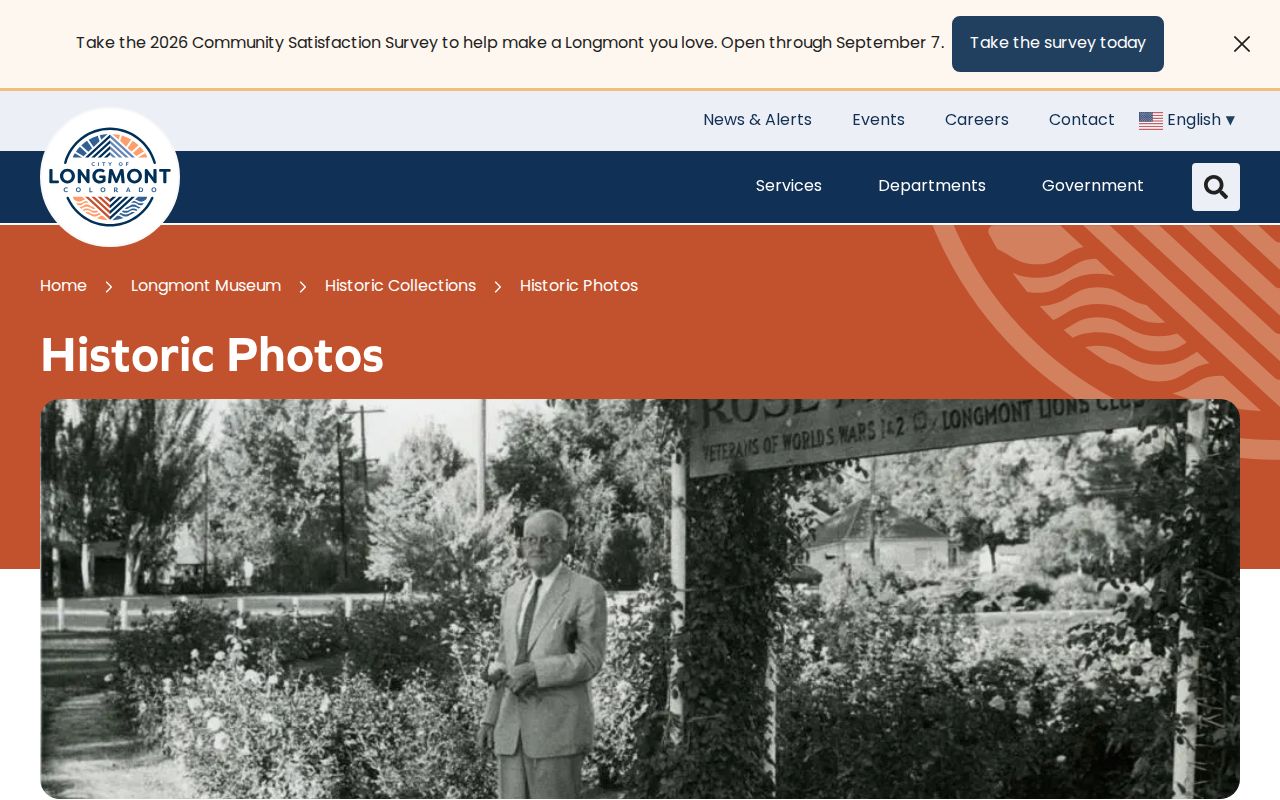
The Longmont historic-photo collection adds visual context for an address. Pair a caption or image with the parcel, directory, and newspaper rather than treating it as a complete occupancy record.
Longmont’s 1871 grid, Main Street, Coffman, Kimbark, historic additions, and the 1879 fire that reshaped the east side of the 300 block of Main Street give a map search a place in time. The Eastside and Westside surveys can add a building name, former owner, style, or survey file. Survey inclusion is not a local historic designation.
Open the Library of Congress Longmont map search for the actual sheet and year. Record the sheet, title, and page because image coverage is item-specific.
Longmont Ledger Bridges Past Residents
The Longmont Ledger index covers notices published from September 12, 1879 through 1935. The date is the publication date. Colorado Historic Newspapers Collection coverage is incomplete, so verify the original issue when a notice matters. Times-Call clippings in Longmont Archives cover about 1967-1991, with roughly 400 boxes and an inventory still in progress.
Shaw Mortuary records cover approximately 1882-1945. The originals were destroyed in a 2013 fire, but the Genealogical Society reproduced and indexed many records in its quarterly material. Treat those entries as surviving reproductions. A cemetery or mortuary lead can point to a newspaper, archive, eligible death certificate, or probate case.
Probate can identify a decedent, personal representative, heirs, address, and parcel, but access depends on the court and file. A later deed can show an estate-to-heir transfer. A newspaper notice can name relatives and a former address. Keep those event clues separate from the title chain and from current occupancy.
These sources are especially useful when the prior resident left before the next directory. They do not erase a gap. They turn the gap into a targeted request.
Longmont Archives Support Past Residents
Longmont Archives, on the second floor of the Museum at 400 Quail Road, accepts Monday-Friday appointments from 9 a.m. to 5 p.m. The archive can research old houses, downtown buildings, historic photographs, letters, diaries, maps, business records, school records, and Times-Call clippings. Send the address, approximate years, former names, photographs, and any permit or directory clue so staff can search the right collection.
The Longmont Archives information page is the source screen for the appointment and collection example.
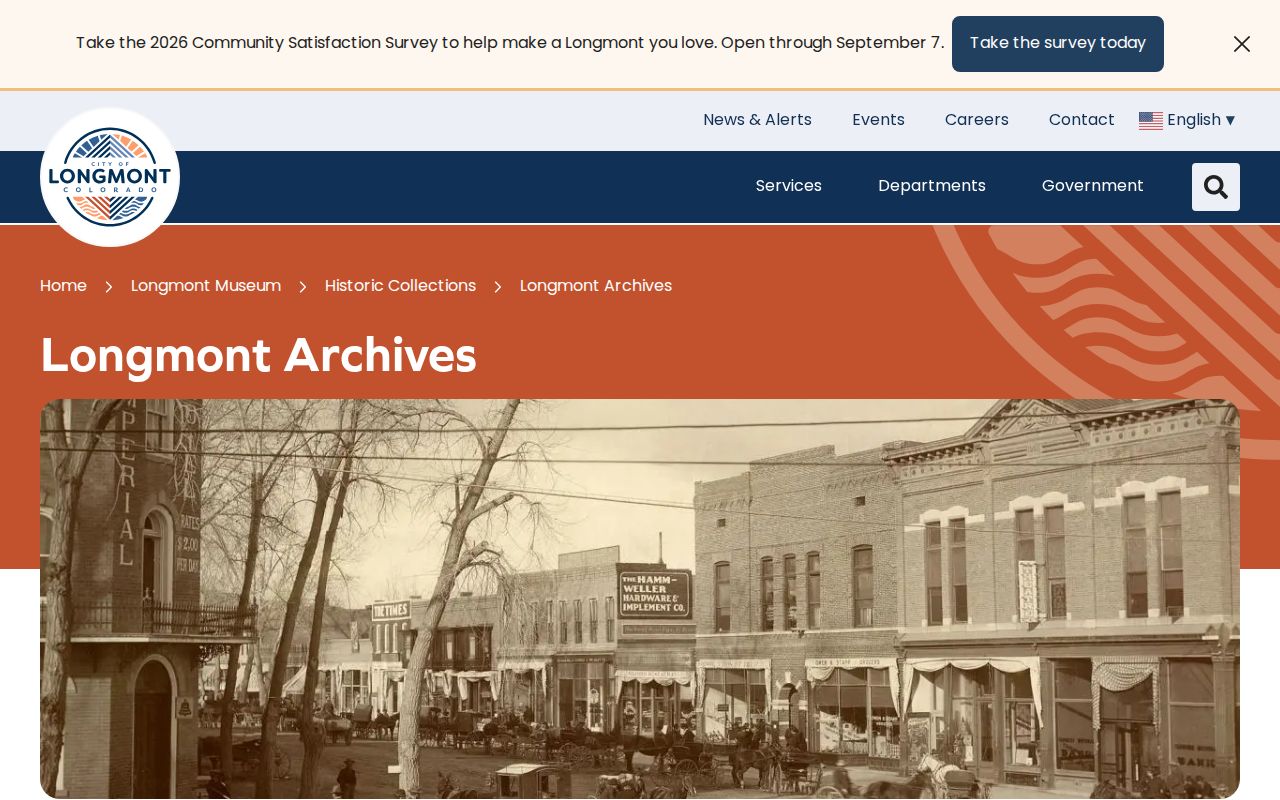
The Longmont Archives page shows why an appointment can recover a lead that a portal does not index by name.
The St. Vrain Historical Society’s appointment-only library, the Longmont Library genealogy service, Denver Public Library, History Colorado, and State Archives extend the same trail. Search by street, business, organization, school, event, subdivision, addition, or approximate year. A photograph caption or oral history supplies context, not automatic proof of residence.
Local history has useful quirks. The 1915 William Henry Dickens case at 303 Coffman Street leads to Denver Public Library papers. The 1941-45 POW dormitory near Third and Kimbark is another place-and-date clue. Use these events to find records, not to assign a person to an address without a source.
Longmont Past Residents Need Evidence
A past owner is not always a past resident. A directory subscriber may not own the building. A business may use a house number. A mailing address may be remote. Mark every note as title, occupant, voter, business, archive, or event. Then compare dates and the legal parcel before joining two entries.
When a person moves, a later directory can reveal the next address. When a person dies, an obituary, mortuary, cemetery, or probate record may close the trail. When the property changes hands, the deed chain reveals the next titleholder. These are different exits from the same address, and the difference is the reason previous-residents research needs more than a name search.
Lawful house history. Previous-resident research in Longmont is appropriate for genealogy, property history, reconnecting, and personal curiosity. Do not use an address trail to track, harass, threaten, or harm a living person.
When Longmont Resident Chains Break
Write down the break. It may be an online cutoff, missing directory, changed street number, parcel split, county mismatch, inaccessible image, confidential vital record, or unresolved name variant. Then choose the next channel: county office books, recorder copy request, library microfilm, FamilySearch or DPL catalog, Museum appointment, newspaper page, State Archives catalog, probate clerk, or a city records request.
| Break | Next test | What to preserve |
|---|---|---|
| Old street does not resolve | Directory front guide, Sanborn, annexation, parcel legal description | Original wording and approximate year |
| Recorder index ends | Office books, microfilm, mail, phone, email, in person | Last document number and legal description |
| Person disappears from a directory | Next edition, census, Ledger, newspaper, probate, cemetery | Last address, occupation, spouse, date |
| Vital record is closed | Eligibility application or Archives and indirect sources | Event lead versus certificate status |
The best previous-residents result is often a well-labeled chain with one honest gap. A careful unresolved step is more useful than a false continuous story.